




Custom Mounting Frame Enables Large-Engine Testing in Legacy Facility
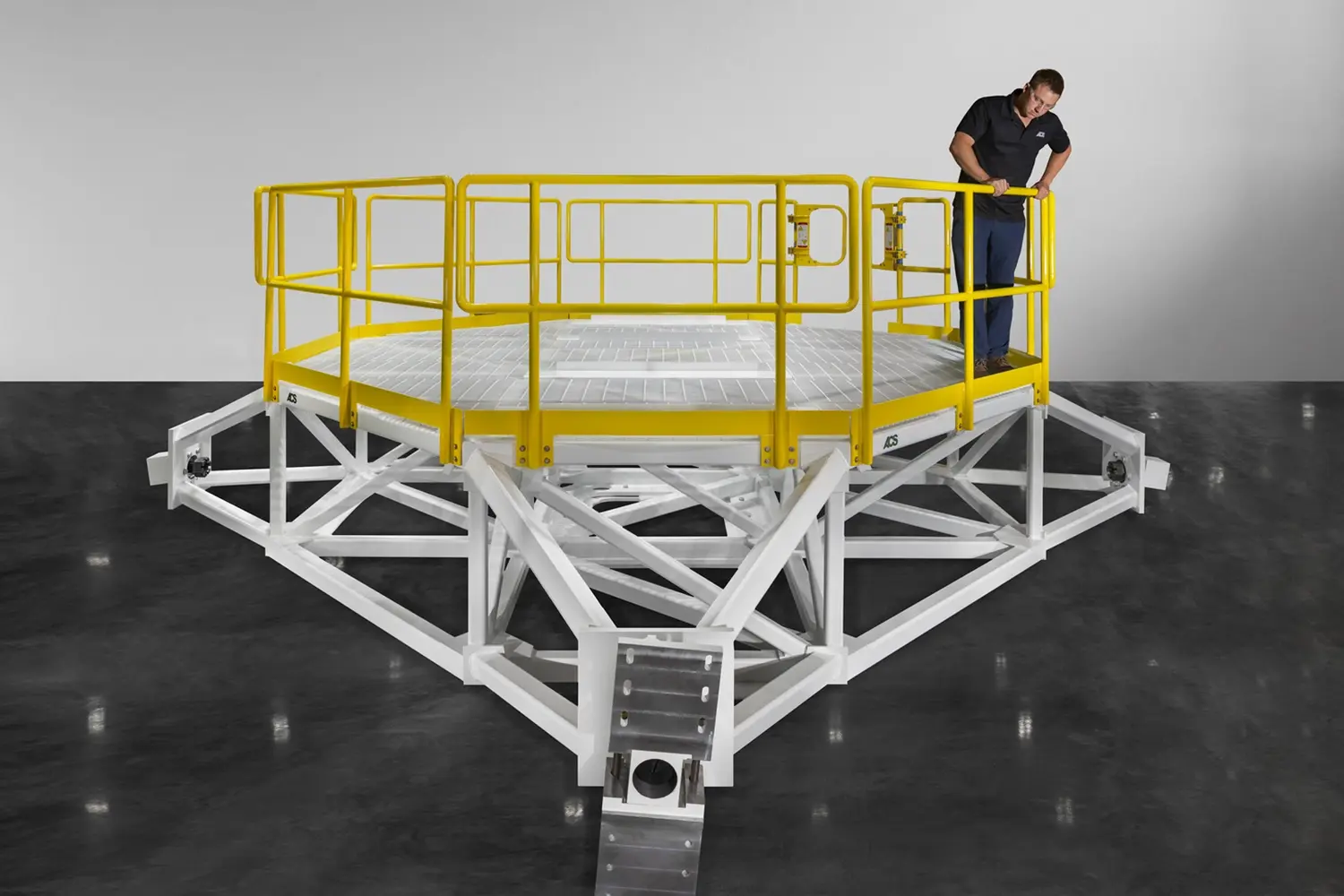
An aerospace company required a new engine thrust test stand to accommodate heavier, next-generation engines while staying within a strict 40,000-pound weight limit for their existing facility. ACS was contracted to design, engineer, and fabricate the precise, 10,000-pound mounting frame. The outcome successfully upgraded the client’s older test cell, allowing safe testing of new engines within the facility’s original structural constraints.
The Challenge
An aerospace company developing a new line of engines needed a new mounting frame for engine thrust testing. Its decades-old mounting frame could not support the increased weight and larger footprint required for the new engine designs and fuel tanks. This necessitated replacing the outdated support structure, which was insufficient for modern new-generation propulsion testing requirements.
The new mounting frame wasn’t just tasked with holding the full weight of the test assembly; the aerospace company specified a strict maximum combined weight of 40,000 pounds for the frame and all equipment within it. This cap was set to protect the integrity of the facility’s infrastructure, as the mounting frame would connect to existing, fixed load-bearing columns within a circular test chamber. The company needed a robust thrust stand that respected these critical facility limitations.
While the company has in-house capabilities to design and fabricate a new mounting frame, it opted to engage ACS. The companies had worked together on prior projects, giving the aerospace company confidence that the cross-functional teams at ACS could complete the project faster and at lower cost than the manufacturer could using internal resources.
The Solution
ACS physical and structural engineers worked collaboratively with the manufacturer and an AEI structural engineer to design the mounting frame. The structure needed to support the required loads without exceeding the combined 40,000-pound limit, fit the test chamber attachment points, and comply with the client’s strict safety standards, a vital requirement for any new aerospace engine test infrastructure. After minor refinements to the initial design, the AEI structural engineer reviewed and stamped the final version of the new thrust stand.
The aerospace company requested a specific hypergolic paint for the mounting frame that was unavailable locally. The ACS procurement team sourced an alternative that met the client’s performance requirements and kept the fabrication phase on track for the specialized engine thrust fixture. This dedication ensures the durability of the thrust stand in the demanding test environment. The design was rigorously engineered to withstand the extreme forces associated with successful new-generation propulsion testing.
The Outcome
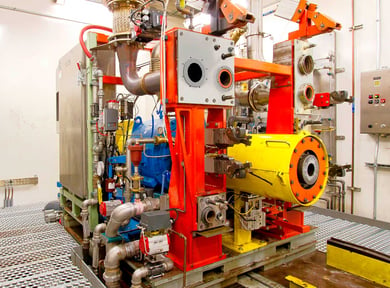
The completed mounting frame measures 16 feet by 16 feet by 4 ft at its smallest points and weighs 10,000 pounds. The ACS team had the mounting frame delivered as a single unit across several states through its shipping partner handling the permitting and physical logistics. This new equipment is ready for supporting the immense engine thrust of next-generation engines.
With the new frame, the client has successfully upgraded an aerospace engine test cell in an older test facility, meeting all the weight, spatial, and safety requirements to test a new generation of large engines without the need for facility structural modifications. By precisely fitting in the test chamber and distributing loads safely, the new thrust stand supports the aerospace company’s ongoing engine development and innovation within the facility’s existing limitations.
Key Features
- The mounting frame is 20 feet x 20 feet x 4 feet and weighs 10,000 lbs
- Structural frame designed to withstand engine thrust loads exceeding 5000 lbf
- Engineered to fit a confined, circular test chamber with fixed attachment points
- Supports up to 40,000 pounds total load including weight of frame, engine, and fuel tanks, making it a reliable thrust stand
ACS Services
- Custom equipment design and fabrication for propulsion test facilities
- Project management
- Logistics management for oversized/complex equipment