

Optimizing Energy Efficiency with Variable Speed Drives and Advanced VFD Technology
Industrial facilities and motor-driven systems are facing unprecedented pressure to reduce energy consumption and improve sustainability. Traditional industrial motor control methods often rely on mechanical throttling or constant-speed operation, leading to significant energy waste, increased mechanical wear, and higher peak demand charges. Overcoming these inefficiencies requires the strategic application of variable speed drives to precisely match motor output to real-time load requirements.
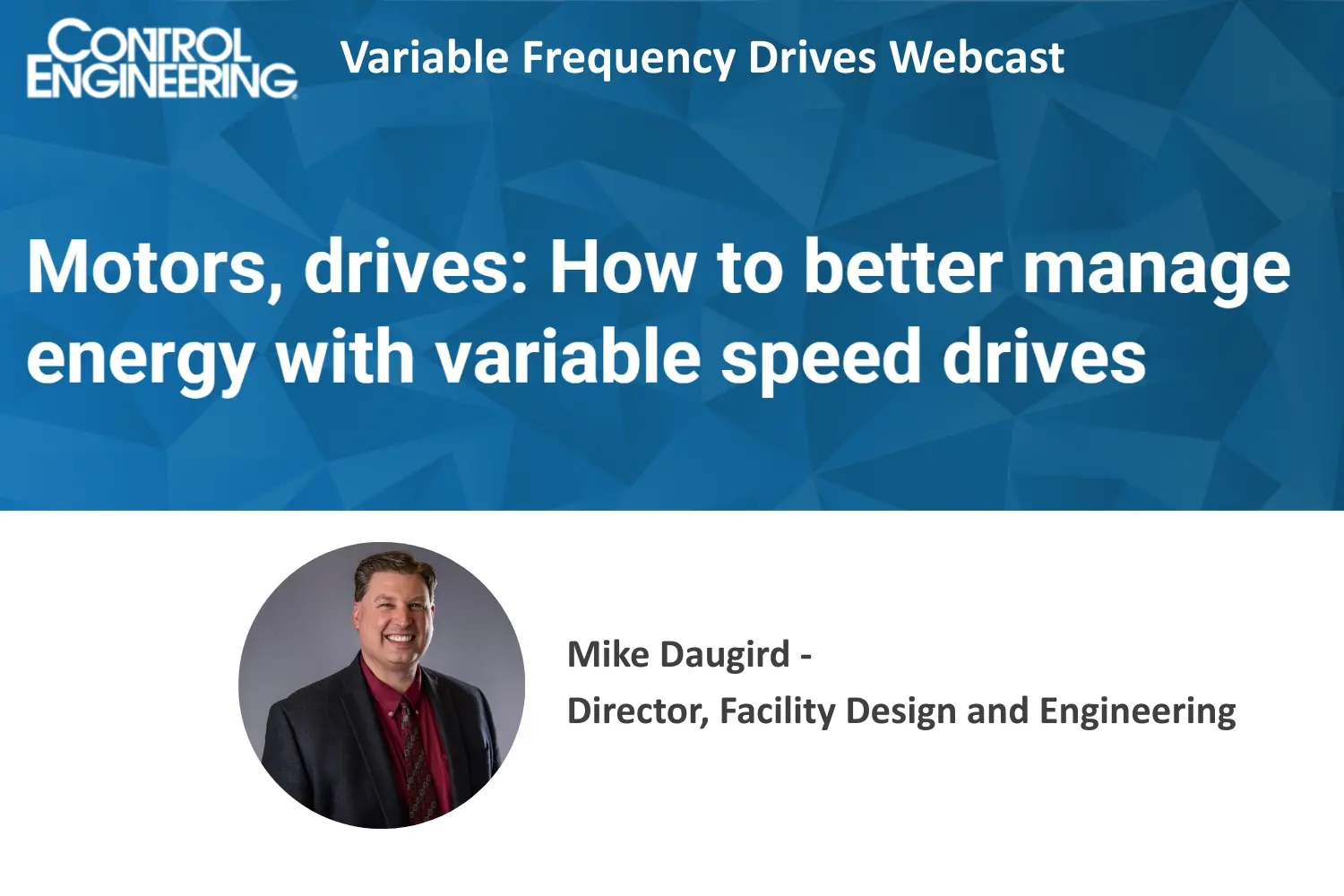
This educational webcast, featuring Mike Daugird, Director of Facility Design and Engineering, explores how VFD technology serves as a cornerstone for modern energy management. By leveraging advanced control algorithms and real-time data, variable speed drives do more than just start and stop motors; they transform them into intelligent, energy-efficient assets. The webcast examines the technical principles of variable torque, motor-drive lifecycle management, and quantified case studies across diverse applications of industrial motor control. Key topics covered include:
- Core features and principles of energy efficiency: The webcast breaks down the physics behind energy savings, specifically the Affinity Laws, which demonstrate how VFD technology allows even small reductions in fan or pump speed to lead to massive power savings. Beyond speed control, the session highlights advanced features of variable speed drives such as motor flux optimization, which reduces losses during light-load conditions, and soft-starting capabilities that eliminate high inrush currents.
- Strategic selection and integration: Successful energy management requires asking the right engineering questions throughout the motor-drive lifecycle. The presentation provides a framework for assessing load profiles and identifying high-potential applications for industrial motor control, such as replacing throttling valves with speed control. Viewers will learn how to navigate NEMA standards for “inverter-duty” motors and utilize accessories like line reactors or dV/dT filters to protect existing infrastructure while maximizing the ROI of a retrofit.
- Quantified case studies and real-world impact: The session demonstrates the tangible benefits of adopting modern VFD technology through detailed case studies across HVAC, water management, and material handling. The data illustrates how these technologies provide measurable and repeatable results. These examples also highlight the significant CO2 reductions achievable, aligning operational goals with global decarbonization efforts.
- Intelligent supervision and system longevity: Modern variable speed drives act as data hubs, providing built-in energy monitoring and communication capabilities. The webcast explores how capturing this data allows for the refinement of sequences of operation, such as optimizing cooling tower performance to improve chiller efficiency. The discussion also covers how “smart” VFD technology features like dead-head pump protection and parallel assist configurations significantly extend the mechanical life of pumps and motors by operating them at their Best Efficiency Point (BEP).
This webcast provides a comprehensive roadmap for facilities looking to modernize their industrial motor control strategies and achieve smarter energy management. Whether you are aiming to reduce utility costs, enhance process reliability, or meet sustainability mandates, this session offers the technical depth and practical examples needed to drive real efficiency.
Access the full webcast now to learn how VFD technology can transform your facility’s energy profile and operational performance.