






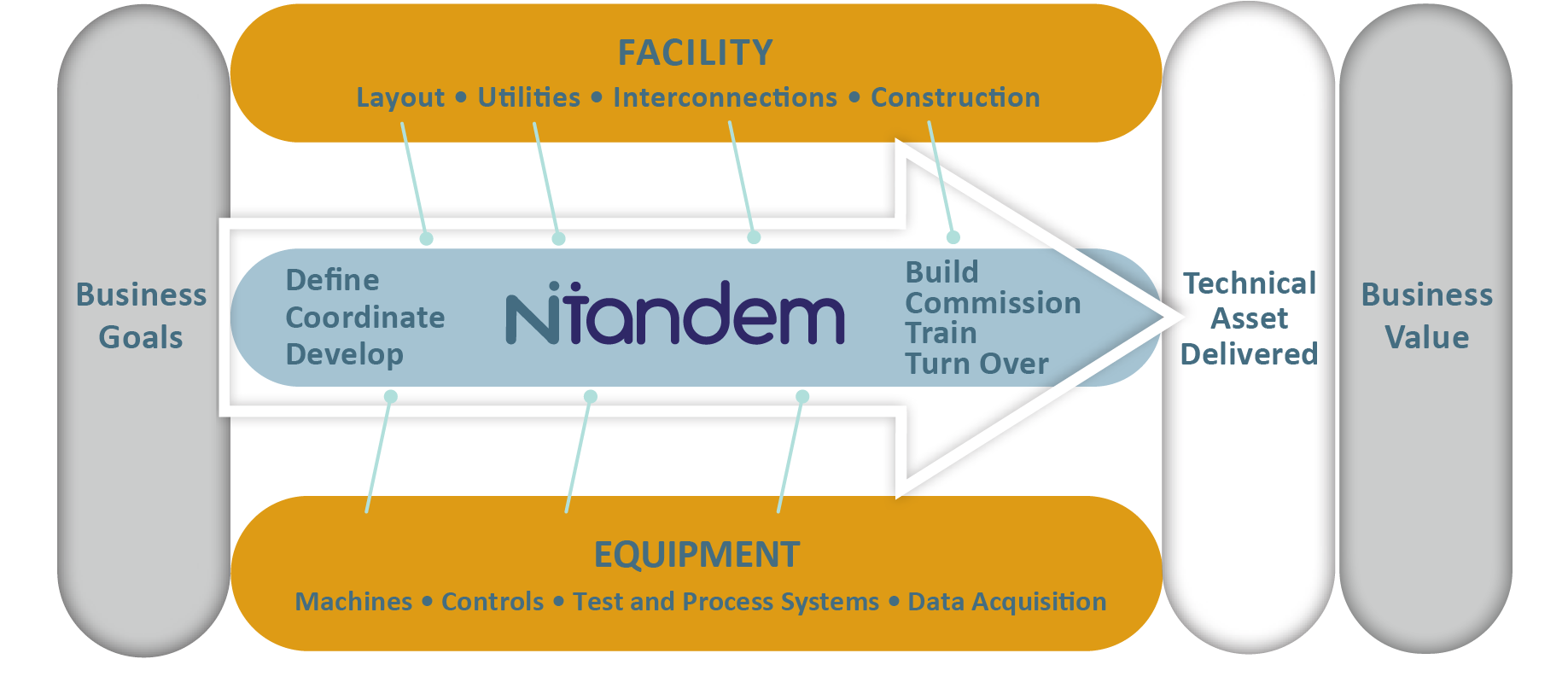






Managing Turnkey Partnerships
What level of communication and transparency should we expect with a turnkey project management approach?
With turnkey projects, expect clear and frequent communication. Weekly status meetings to update you on schedule, budget, risks, and issues should be standard. You also want to setup matched communication hierarchies (e.g. engineer to engineer) across both companies. Any impacts to the scope or timeline must be promptly disclosed with proposed mitigation strategies. Working with a provider that has a broad depth of capabilities in-house allows for faster communication and problem solving, as the project manager always has a complete view of the project and its dependencies.
How do we manage scope change within a fixed-price contract?
Detailed front end planning is crucial for documenting project scope with the specificity needed to negotiate a Guaranteed Maximum Price (GMP) that shares the risk of absorbing minor scope changes. A major out of scope change would likely require a separate negotiation. Clear documentation and open communication throughout the project can help lower the risk of a major scope change.
How can we vet a turnkey services provider?
Your vetting process for a turnkey services provider is essential to your project’s success, given the scope of responsibility the turnkey provider will have. Some critical areas to assess are their experience in designing and managing projects similar to yours, ability to complete the project within required timelines, the company’s financial stability, and references. You also want to determine whether their communication and management styles align with your company’s expectations.
Evaluating Turnkey Project Management
There’s concern about the level of control we’d be giving up; how can we be sure turnkey will work for our company?
It’s a common concern. Vetting potential turnkey providers is critical. Working with the right turnkey provider, you should expect a thorough front end planning process that clearly defines project scope and success metrics. This is a collaborative process that keeps your company fully in control of defining scope, requirements, and success metrics. It helps you manage risk as the turnkey provider is incentivized to identify and mitigate potential issues early. Effective turnkey management is about smart delegation and partnership, not losing oversight of your project.
How can we assess whether a turnkey project management approach is right for our project?
Turnkey projects are well-suited for capital projects due to their complexity and scale. However, a turnkey approach can also benefit smaller projects with its streamlined process, fixed budget, and single point of contact. Assess your internal capacity and capabilities relative to the project scope. A turnkey approach may be preferable if your project exceeds available resources or subject matter expertise within your company, regardless of project size.
How does turnkey project management differ from a traditional project management approach?
Turnkey projects provide a single point of contact responsible for the entire project lifecycle under a fixed-price contract. Traditional management separates engineering, procurement, and construction among different entities without a unified budget, with little coordination or communication.