
Integrating Industrial Risk Management into Industrial Equipment Design
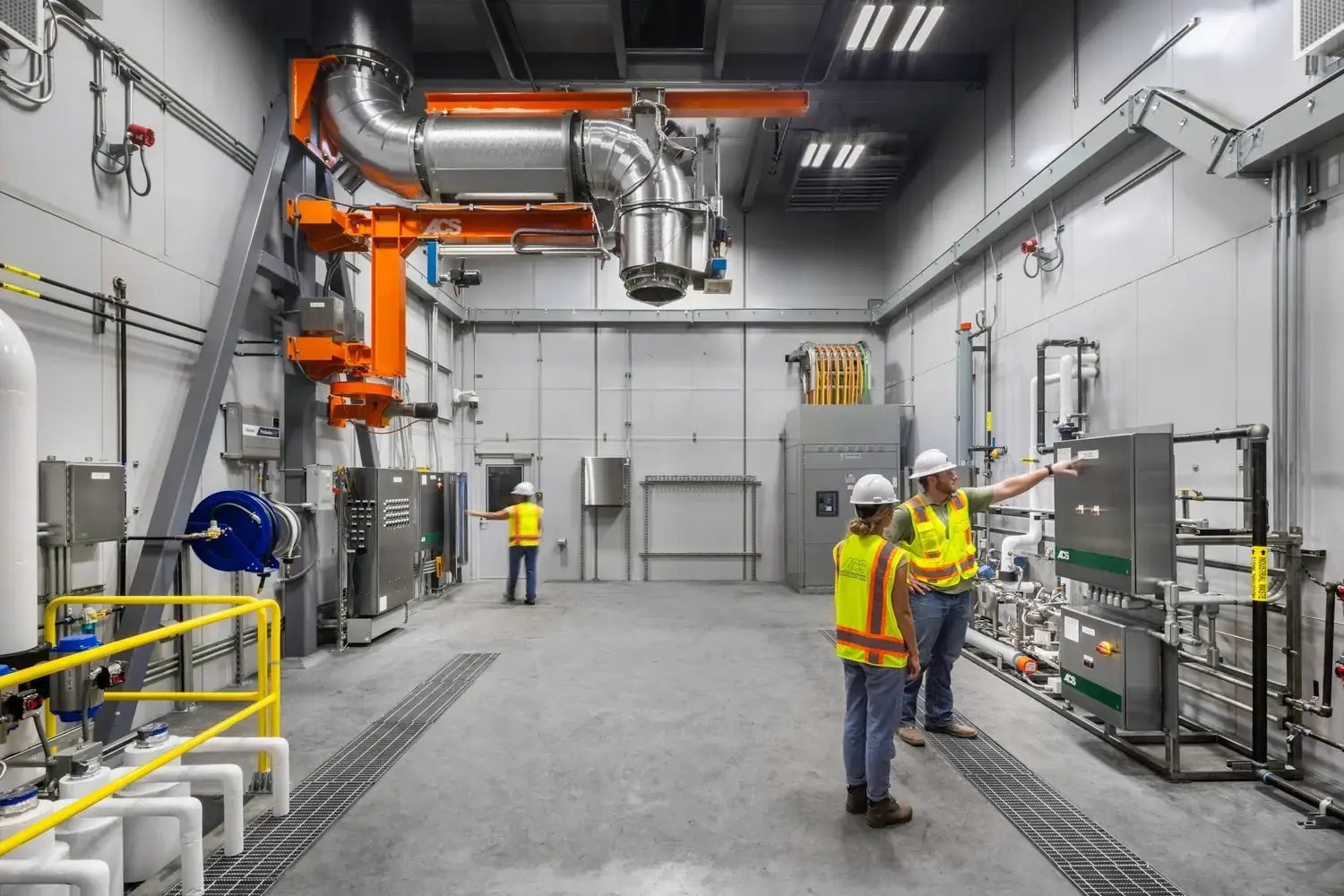
In the world of industrial manufacturing and facility management, the safety of your operators is as critical as the output of your machines. While advanced machinery has revolutionized production speeds, it has also introduced complex layers of operational uncertainty. Protecting the “physical heart” of your plant requires more than just reactive fixes; it demands a strategic commitment to industrial risk management from the very first sketch of the industrial machinery and equipment design phase. By adopting a “safety-by-design” approach and prioritizing industrial equipment safety, you can integrate safeguards that reduce hazards at the source for a fraction of the cost of a post-installation retrofit.
In the article “From the Start: Reducing Worker Risk in Industrial Equipment Design,” published in FMJ, David Suehs, Director, Machine Design, explores how facility managers and design teams can collaborate to build resilience into industrial ecosystems, highlighting several critical pillars:
- Early-stage risk assessment improves outcomes. Research and industry standards like ISO 12100 show that identifying process-related risks during the concept phase of industrial machinery and equipment design results in more successful implementations. When industrial equipment safety is an afterthought, countermeasures become exponentially more difficult and costly. Engaging a broad group of stakeholders in industrial risk management, including facility management, IT, and manufacturing personnel, ensures that site-specific realities are addressed before they become expensive surprises.
- Engineering for failure modes prevents accidents. Understanding how equipment behaves during a power loss or emergency stop is vital to industrial equipment safety. High-risk factors like stored energy (heat, motion, and pressure) require deliberate engineering responses within the industrial machinery and equipment design, such as controlled venting or fail-safe valve settings. Planning these responses early through proactive industrial risk management, rather than as field modifications, reduces both project schedules and long-term operational costs.
- A robust hierarchy of protection balances cost. While redundant sensors and smart PLCs offer high-tech oversight, they can triple investment costs. The challenge lies in balancing sophisticated controls with reliable mechanical solutions to ensure long-term industrial equipment safety. Guards, stops, and geometric constraints often provide more durable protection against human error and “nuisance downtime” than electronic safeguards alone.
The real challenge lies in identifying exactly where your facility is most vulnerable. You must prioritize risk scoring to distinguish genuine hazards from perceived problems, especially as emerging technologies like robotics and remote monitoring expand your industrial risk management profile. These advancements introduce new dependencies; if a remote connection fails, process-level safeguards within the industrial machinery and equipment design must function independently to prevent a single point of failure. As regulatory standards and insurance requirements mature, failing to integrate these “safety-by-design” principles will soon jeopardize not just your workforce, but your operational compliance.
Modern industrial environments require a shift from a “final checklist” mentality to a model of continuous resilience. This includes adopting a disciplined framework for identifying hazards and ensuring that any new equipment integration includes a deep dive into “if-then” scenarios. Without a plan to address how systems fail, even the most advanced machinery can become a liability.
Ultimately, designing for safety is a strategic investment that provides a critical competitive advantage. It maximizes the reliability of your infrastructure by ensuring that protection, performance, and cost are harmonized. By addressing risks through a combination of technical rigor, stakeholder input, and an understanding of human behavior, you can ensure your industrial equipment remains a robust asset rather than a liability.
Read the full article here.